For the bigger picture and full context, make sure you read our main guide on Carl Jung Dream Interpretation: Unlocking Your Unconscious Mind.
markdown
Ever wake up from a dream so bizarre it leaves you wondering what your mind is really trying to tell you? Jungian dream interpretation offers a powerful set of tools to decode these nightly narratives and tap into the wisdom of your unconscious.
At a glance:
- Learn to identify and understand common archetypes in your dreams.
- Discover how your dreams compensate for your waking life attitudes.
- Master techniques like amplification to unlock hidden dream meanings.
- Develop a practical approach to integrating dream insights into your daily life.
- Address and reframe "nasty" dreams to leverage their potent messages.
The Language of the Unconscious: Why Jungian Dream Interpretation Matters
Carl Jung believed that dreams are not random firings of neurons, but rather a direct line to the unconscious mind. Unlike Freud, who saw dreams primarily as wish fulfillment, Jung viewed them as compensatory – balancing out our conscious attitudes and revealing aspects of ourselves we might be ignoring. Understand your dreams with Jung to begin your exploration. Through understanding the symbols and meanings within your dreams, you can embark on a journey of self-discovery and personal growth.
Dreams speak to us in a unique language, using symbols, metaphors, and narratives. Jungian dream interpretation provides a framework for deciphering this language, allowing us to understand the messages our unconscious is trying to convey. This process isn't about predicting the future; it's about understanding the present and unlocking potential for growth.
Core Components: Archetypes, the Shadow, and Compensation
To effectively interpret dreams from a Jungian perspective, you need to understand a few key concepts:
- Archetypes: Universal, inherited patterns of behavior, images, and ideas that reside in the collective unconscious. Examples include the Self, the Shadow, the Anima/Animus, and the Persona.
- The Shadow: The repressed, denied, or disowned aspects of your personality. It can manifest in dreams as a dark figure, a monster, or even a seemingly insignificant character exhibiting undesirable traits. The shadow carries both negative and positive characteristics, often referred to as the "golden shadow."
- Compensation: Dreams often act as a counter-balance to your conscious attitudes and behaviors. If you are overly focused on work, your dreams might feature themes of relaxation and leisure. If you consider yourself to be extremely kind, your dreams may reveal underlying aggression.
Example: A successful businesswoman, consciously focused on logic and achievement, repeatedly dreams of nurturing a garden. This could be interpreted as her unconscious compensating for a lack of attention to her "feminine" or nurturing side, urging her to find balance in her life.
Decoding the Dream: A Step-by-Step Guide
Interpreting your dreams is a process of exploration, association, and reflection. Here’s a step-by-step approach to guide you:
Step 1: Record the Dream
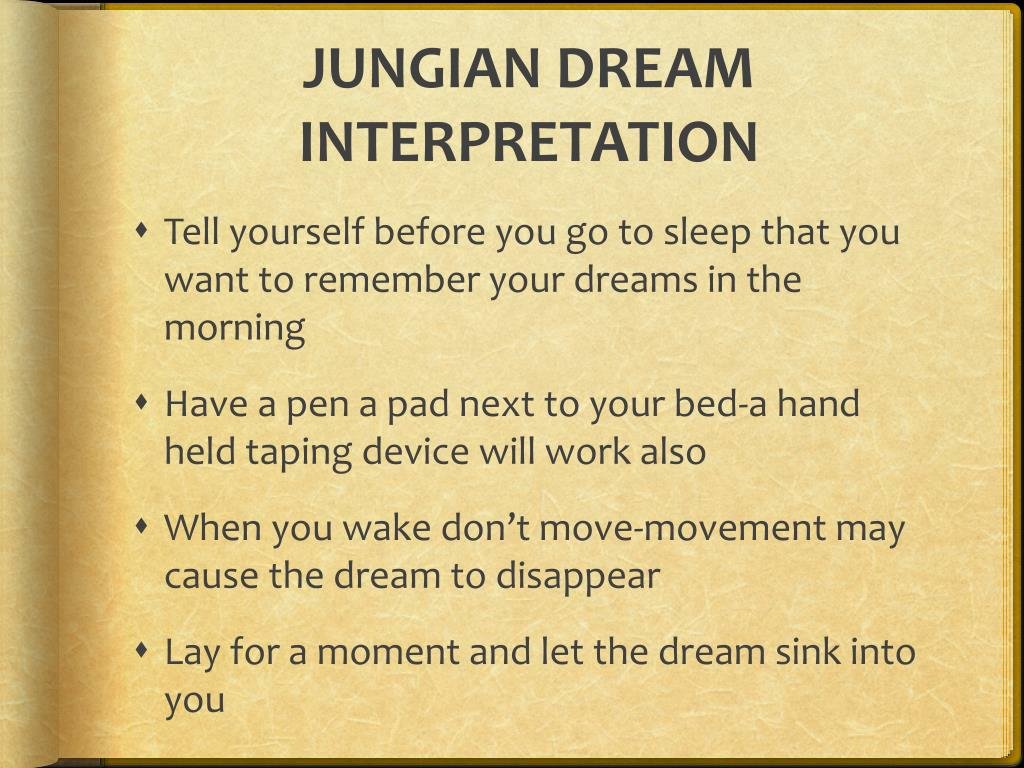
Keep a dream journal by your bed. As soon as you wake up, write down everything you remember, even seemingly insignificant details. Don't censor or analyze, just capture the raw material. Make notes of the emotions that accompanied the dream.
Step 2: Describe and Relate
Write a detailed description of the dream, including the setting, characters, objects, and events. Then, consider:
- Associations: What personal associations do you have with the dream elements? A particular person, place, or object might trigger specific memories or emotions.
- Life Connections: How does the dream relate to your current life situation, challenges, or relationships? Are there any parallels or symbolic connections?
- Emotional Resonance: What emotions did you experience in the dream, and how do those emotions manifest in your waking life?
Step 3: Identify Key Symbols
Look for recurring images, unusual objects, or emotionally charged elements in the dream. These are likely key symbols.
Example: Dreaming of a locked door might symbolize feeling stuck, a lack of opportunity, or a fear of the unknown.
Step 4: Amplify the Symbols
This is where Jungian dream interpretation diverges significantly from other approaches. Amplification involves exploring the symbolic meaning of the dream images through cultural, historical, and archetypal lenses. Consider: - Mythology and Folklore: Do any of the dream symbols appear in myths, legends, or folk tales? What is their significance in those contexts?
- Religious and Spiritual Traditions: Are there any religious or spiritual symbols in the dream? What do they represent in that tradition?
- Personal Symbolism: How do these symbols relate to your personal history, beliefs, and values?
Example: If you dream of a snake, you might research its symbolism in different cultures. In some cultures, it represents healing and transformation; in others, it symbolizes deception and danger. Your personal associations with snakes will also be important.
Step 5: Interpret and Integrate
Based on your associations, life connections, and amplified symbols, formulate a possible interpretation of the dream. What message is your unconscious trying to convey? How can you integrate this insight into your daily life?
Example: After amplifying the snake symbol, you might realize that your dream is urging you to shed old patterns and embrace transformation, even if it feels risky.
Step 6: Active Imagination
This involves consciously engaging with the dream figures or symbols in your imagination. You can have a conversation with a dream character, explore the dream setting in more detail, or create a new scenario based on the dream. This process can lead to deeper understanding and integration.
The Power of "Nasty" Dreams: Embracing the Uncomfortable
Dreams involving unpleasant or disturbing imagery are often the most powerful. These "nasty" dreams are not prophetic warnings or signs that you are a bad person. Instead, they are often urgent messages from your unconscious, demanding your attention.
Reframe and Reclaim
- Acknowledge the Emotion: Don't dismiss the dream or try to suppress the negative emotions it evokes. Acknowledge the feelings of fear, anger, or sadness.
- Identify the Trigger: What aspects of your waking life might be triggering these dreams? Are you avoiding a difficult situation, repressing certain emotions, or neglecting important needs?
- Seek the Message: What is the dream trying to tell you? What aspects of yourself or your life are you ignoring or denying?
- Embrace the Shadow: "Nasty" dreams often feature shadow figures or shadow aspects of yourself. Embrace these aspects, acknowledge their presence, and explore their potential positive qualities.
Example: A recurring dream of being chased by a monster might represent a fear of failure or a suppressed anger. By exploring these emotions and acknowledging their roots, you can begin to integrate these shadow aspects and reclaim your power.
Practical Playbook: Tips for Effective Dream Interpretation
- Create a Ritual: Establish a consistent bedtime routine to promote restful sleep and dream recall.
- Set an Intention: Before going to sleep, remind yourself that you want to remember and understand your dreams.
- Don't Overanalyze: Avoid forcing interpretations or getting too caught up in intellectual analysis. Trust your intuition and allow the meaning to unfold naturally.
- Be Patient: Dream interpretation is a process that takes time and effort. Don't get discouraged if you don't understand your dreams immediately.
- Seek Guidance: If you are struggling to interpret your dreams, consider working with a therapist or counselor who is trained in Jungian dream interpretation.
Quick Answers: Common Questions About Jungian Dream Interpretation
Q: Are all dreams meaningful?
A: From a Jungian perspective, yes. Even seemingly nonsensical or fragmented dreams can offer valuable insights into your unconscious.
Q: Can dreams predict the future?
A: Jungian dream interpretation focuses on understanding the present, not predicting the future. Dreams can offer insights into potential future attitudes or events, but they are not fortune-telling devices.
Q: What if I don't remember my dreams?
A: Practice good sleep hygiene, set an intention to remember your dreams, and keep a dream journal by your bed. Even if you only remember fragments, write them down. Over time, your dream recall will likely improve.
Q: Is there a "right" way to interpret a dream?
A: No. Dream interpretation is a subjective process. The most important thing is that the interpretation resonates with you and provides you with valuable insights into your life.
Q: Can I interpret my own dreams, or do I need a professional?
A: You can certainly begin to interpret your own dreams. However, working with a trained therapist or counselor can provide valuable support and guidance, especially when dealing with complex or challenging dreams.
Take Action: Unlock Your Subconscious Today
Start your journey of self-discovery by keeping a dream journal. Record your dreams, explore their associations, and amplify their symbols. Remember that dream interpretation is a process of exploration and integration. Be patient, trust your intuition, and allow your dreams to guide you towards greater self-understanding and wholeness.